


The Tarim Oilfield has cumulatively put into production over a hundred new wells this year.
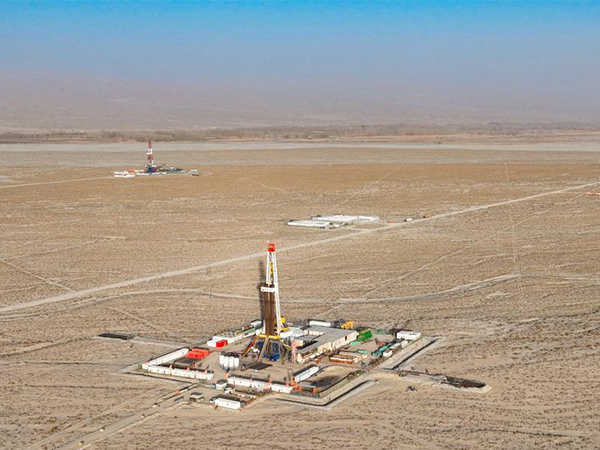
As of December 21st, the Tarim Oilfield has put into production 113 new wells this year, increasing crude oil production capacity by 109.23 million tons and natural gas production capacity by 2.234 billion cubic meters. Behind this achievement lies the combined efforts of the oilfield's "map-based operation" compulsion mechanism, the full-chain technical support, and meticulous management.
To accelerate the progress of pre-drilling construction and the drilling of exploration wells, the Tarim Oilfield has refined the early drilling process and established a "real-time tracking, weekly supervision, semi-annual notification, and year-end assessment" closed-loop management mechanism, laying the foundation for exploration discoveries and the completion of reserve tasks. By the end of November, 51 exploration and evaluation wells had been drilled, an increase of 10 wells compared to the same period last year, representing a 24% increase.
Technological breakthroughs have solved the "underground maze". During the construction of the risk exploration wells in the Tarim West area, the Tarim Oilfield strengthened lithology identification and stratigraphic prediction, and through dynamic adjustment of drilling fluid density, achieved the synergy of "preventing collapse, preventing caving, and preventing leakage". For the Fu Dong 105 well, facing extremely harsh conditions of ultra-deep and high-pressure, it adopted full-process simulation drills and 24-hour pressure monitoring, setting a domestic record for the production pressure at the wellhead of a test oil well. The application of the mobile logging laboratory and continuous light hydrocarbon monitoring technology has transformed oil and gas identification from "post-event analysis" to "real-time decision-making", pressing the "fast-forward button" for reservoir evaluation.
Mechanism innovation has broken through the "last mile". The Tarim Oilfield has sorted out problems in the entire production chain of single-well construction, and issued the "Notice on Accelerating the Ground Construction of Single Wells", through optimizing design start-up time, implementing standardized material reserves, and other measures, reducing the average production time of development wells by over 18 days, and the average production time of exploration and evaluation wells by nearly 46 days, increasing production efficiency by 45% and 29% respectively.
 Check the mobile website